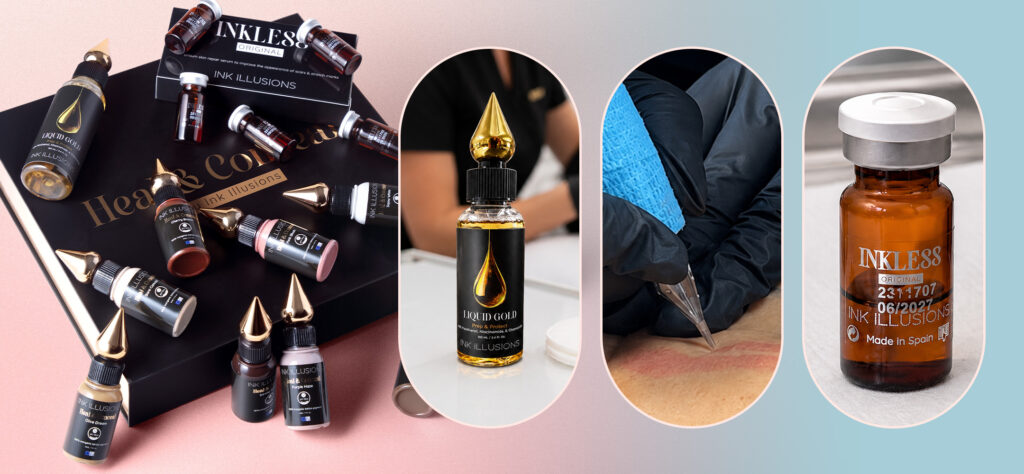
Scar Camouflage Tattoo: Is This the Next Treatment PMU Artists Should Offer?
A scar camouflage tattoo uses skin tone pigment to blend scars and stretch marks into the surrounding skin. Alongside MCA inkless tattooing, it sits within medical tattooing, and it is one of the few areas of permanent makeup still waiting to be claimed. If you have been wondering where your next treatment could come from, this one is worth a proper look.
Scar Camouflage and MCA Inkless Tattooing: A Guide for PMU Artists
Brows and lips have become incredibly competitive, and many artists are now looking for a treatment that is specialist, in demand and genuinely valuable to clients. Most people have a scar, stretch mark or area of skin they would love to improve, yet there are still relatively few artists offering these treatments professionally. For anyone who already understands needles, skin, colour and healing, that is a real opportunity.
About the author -I'm Zena Bratcher, creator of Heal & Conceal and director of Ink Illusions, one of the UK's leading clinics specialising in scar camouflage, stretch mark camouflage and MCA inkless tattooing. Since opening Ink Illusions in 2018, I've worked with thousands of clients and trained artists internationally in paramedical tattooing and skin restoration techniques. The products I've developed were born from real treatment experience. They were created because, in clinic, I knew exactly what artists needed to offer these treatments professionally and with more predictable results.
What Is Scar Camouflage Tattooing?
Scar camouflage, sometimes called skin camouflage or a scar cover up tattoo, is the process of implanting skin tone pigment into a healed scar or stretch mark so it blends more closely with the skin around it. It sits under the wider umbrella of medical tattooing, alongside areola restoration and MCA inkless tattooing.
It is worth being clear with clients about what it is not. Unlike camouflage makeup for scars, which is reapplied daily and sits on the surface, camouflage tattooing works within the skin and is designed to last.
Scar and stretch mark work is not just about covering skin. It is about understanding the skin first: when to improve it, when to camouflage it, and how to support it afterwards.
What Is MCA Inkless Tattooing?
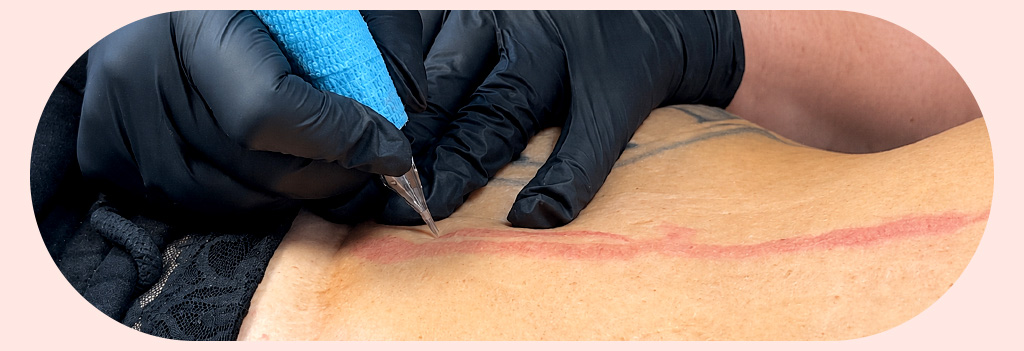
MCA inkless tattooing, formerly known as dry tattooing, is a specialist tattoo-based technique used on scars, stretch marks and uneven skin texture without implanting pigment. Instead of adding colour, it creates a controlled skin response using tattoo needling techniques.
How It Differs From Microneedling
Although the two are often compared, they are not the same treatment:
- MCA is performed with a machine and a very fine needle, commonly a 3RL
- The artist works on individual scars, stretch marks or areas of texture rather than a broad area of skin
- That precision allows far more control over depth, pressure and placement
Why Technique Matters
MCA inkless tattooing can achieve beautiful results, but it is not risk-free. Precision is especially important across different skin types, as some clients are more prone to post-inflammatory hyperpigmentation. Training, technique, depth, needle choice, skin assessment, aftercare and the product used during treatment all affect the final outcome.
It can be offered as a standalone treatment for certain scars and stretch marks, or used as part of a longer plan before skin tone camouflage.
"A lot of artists think camouflage is just about putting colour into the skin, but often the skin needs improving first. MCA inkless tattooing can be an important step in preparing the skin before inking."
Already Offering MCA? Product Choice Still Matters
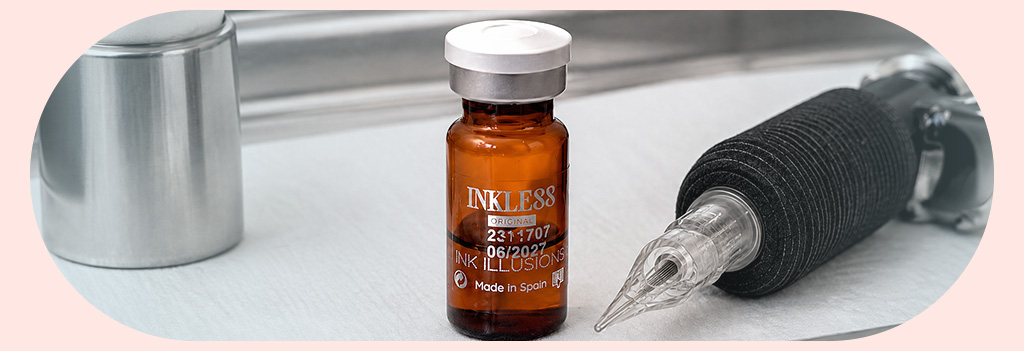
Not all treatments are performed in the same way, and not all products used during them are developed for the purpose. For years, artists relied on basic hydrating solutions such as hyaluronic acid during needling treatments, and some used no product at all. Hydration matters, but MCA places controlled stress on the skin, so the product used should support the type of skin response you are trying to encourage.
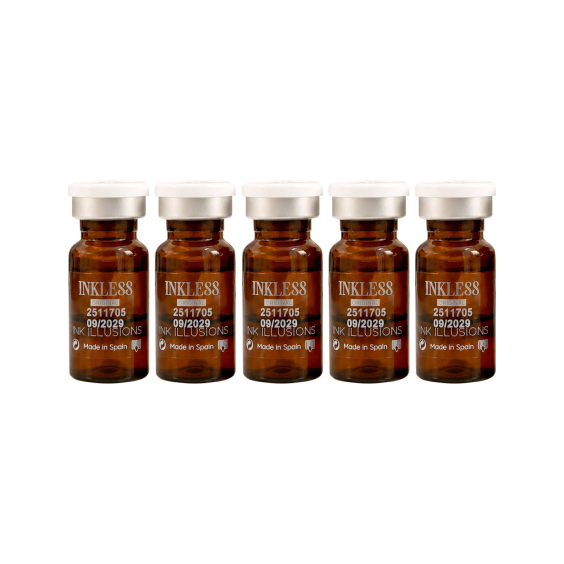
"I didn't want artists using something generic and hoping for the best. INKLESS was created for the treatment itself - for MCA inkless tattooing, stretch mark revision, scar work and the kind of skin response we want to encourage."
INKLESS is a professional serum formulated specifically for MCA inkless tattooing and microneedling-style treatments, containing:
- Hyaluronic acid
- 15 vitamins
- 8 minerals
- 5 nucleic acids
- 24 amino acids
- 5 co-enzymes
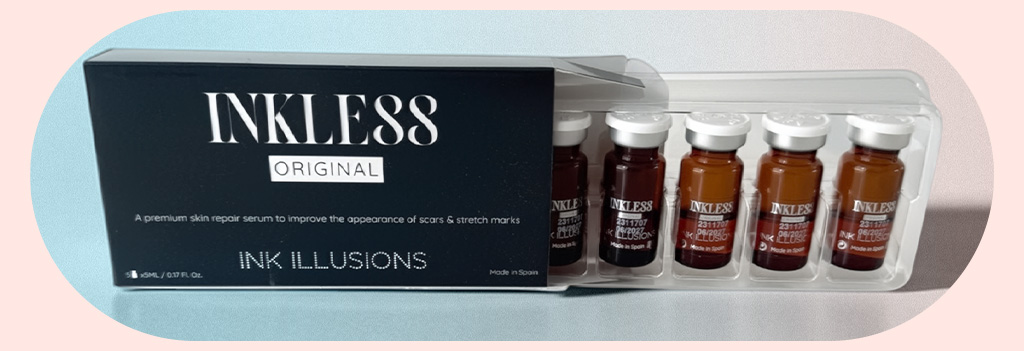
Clinics already using INKLESS report faster-looking recovery, smoother-looking skin and improved treatment outcomes compared with basic hyaluronic-acid-only serums. For artists already offering MCA, it can be introduced straight into an existing treatment process.
Can You Tattoo Over Stretch Marks?
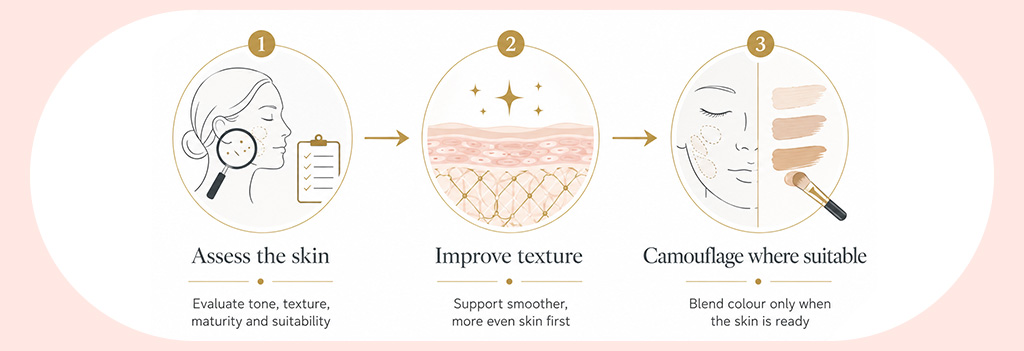
Yes, but not always straight away, and not always with pigment first. Whether you can tattoo over stretch marks or a scar depends far more on the condition of the skin than on the age of the client or the size of the area.
Hold off on pigment when the skin is:
- Textured or ridged
- Wrinkled or thin
- Shiny or uneven in surface
In these cases, MCA inkless tattooing can be used first to improve the skin before colour matching is attempted. Scar and stretch mark camouflage is not simply colour correction. It requires an understanding of skin condition, scar maturity, pigment behaviour and long-term healing.
“For me, good camouflage is never just about colour. It starts with understanding the skin. Sometimes the best result comes from improving texture before we even think about pigment.”
For PMU artists, this is often a different mindset from brows or lips. With camouflage, the best results usually come from a treatment journey rather than a single appointment.
When Pigment Is The Right Step: Heal & Conceal

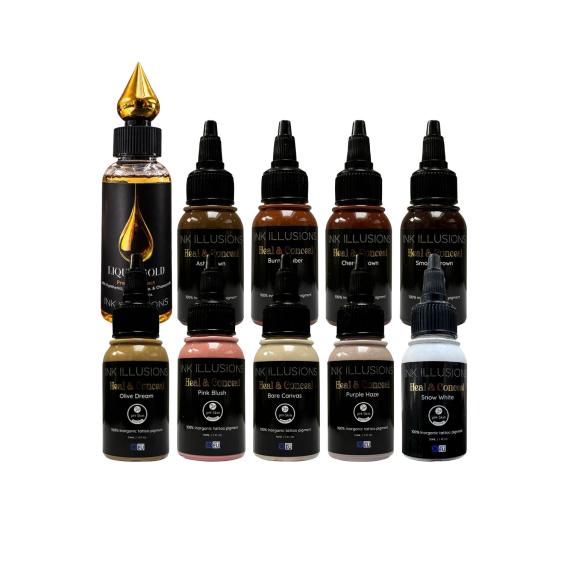
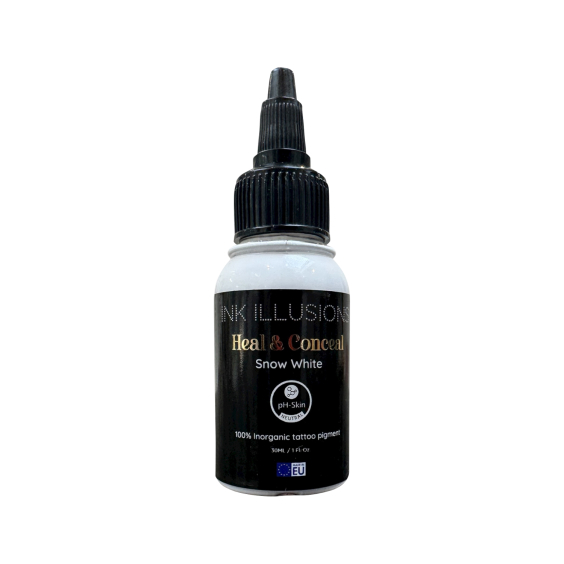
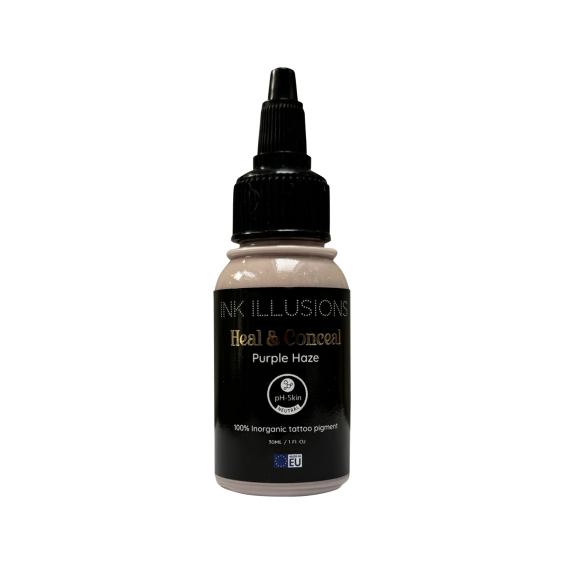
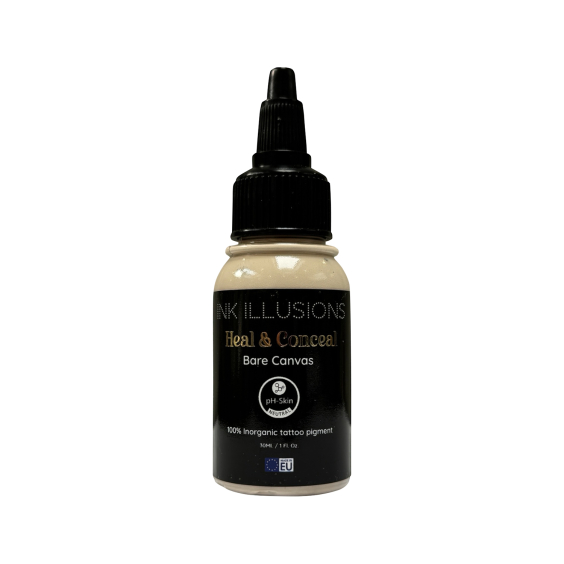
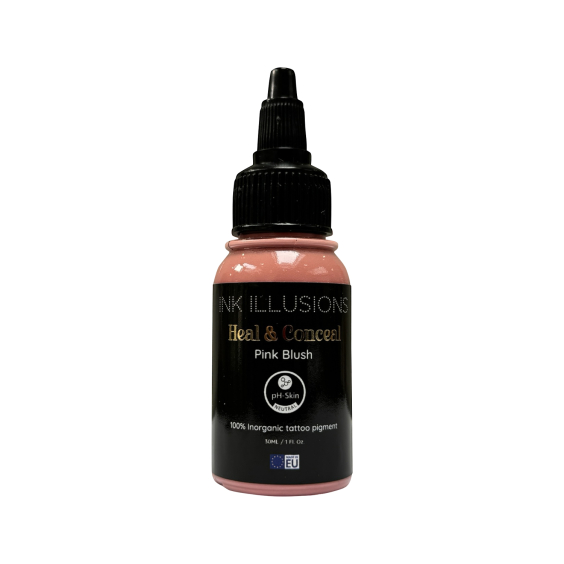
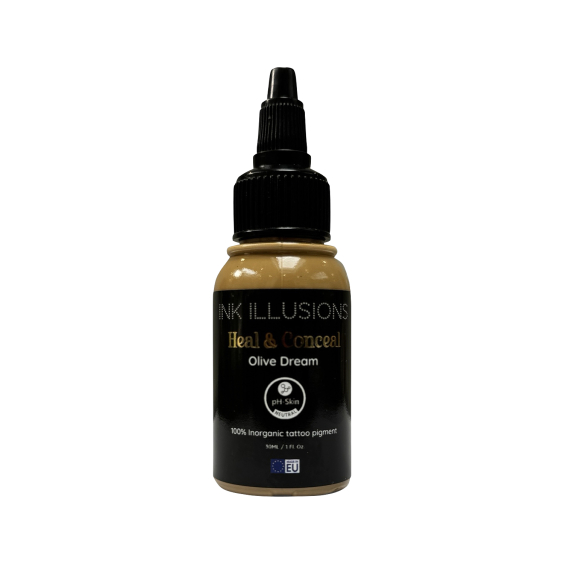
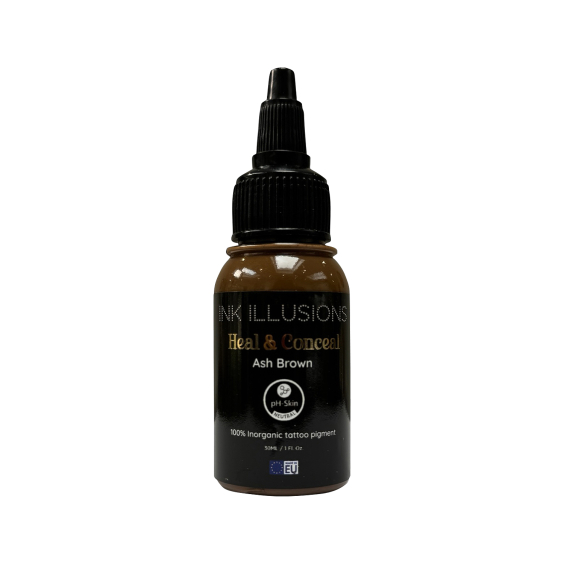
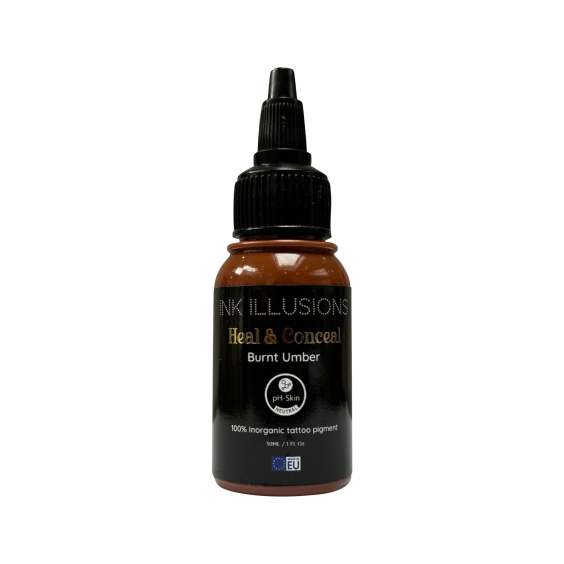
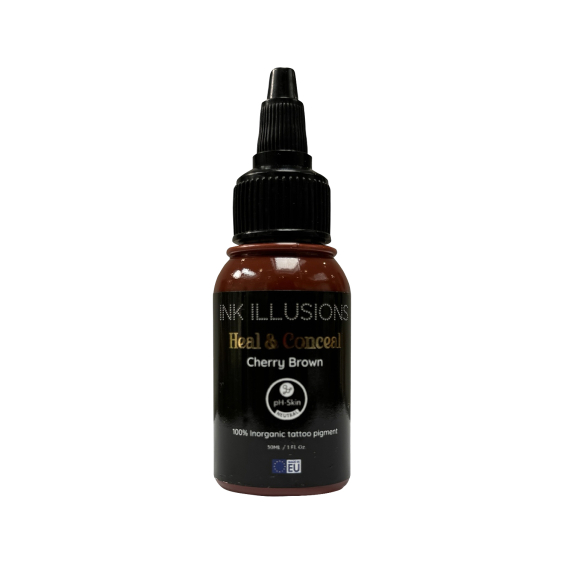
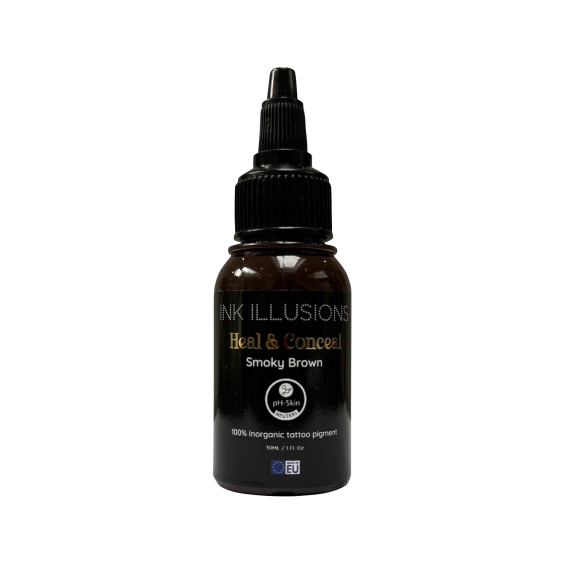
Heal & Conceal is a 100% inorganic, pH-skin neutral, REACH-compliant skin tone tattoo pigment system developed specifically for scar and stretch mark camouflage.
It is not a selection of ready-made skin colours to be used straight from the bottle. The pigments have been created as a complete colour system, designed to be mixed using colour theory so artists can create custom blends for any undertone or overtone.
"The Heal & Conceal set is not a collection of random skin colours. Every bottle has a job. The colours are designed to work together, because achieving a natural-looking skin tone requires more than simply matching a colour. It involves understanding undertone, overtone, warmth, coolness and depth, as well as using the correct technique and neutralising unwanted tones where necessary."
This is why the complete set matters. Some scar camouflage pigment sets do not contain all of the colours needed to apply colour theory across every skin undertone. Heal & Conceal was developed to close that gap.
Why 100% Inorganic Pigments Matter For Skin Camouflage
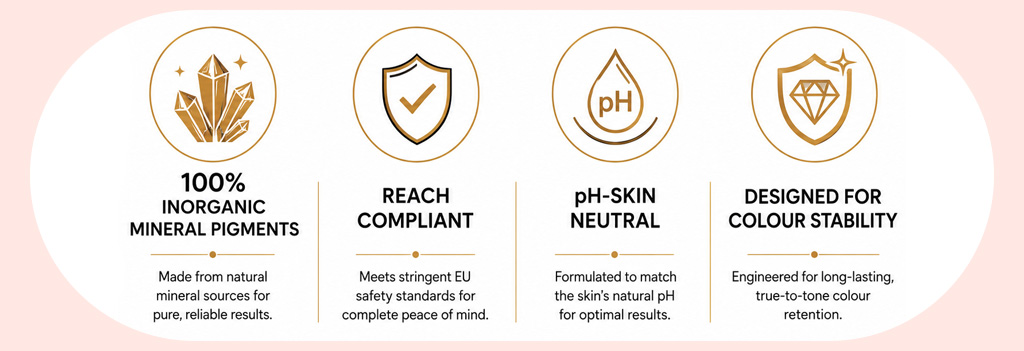
"With skin tone camouflage, clients want results that last. They don't want colours that fade over 1-2 years, or shift unpredictably. That's why I wanted a system where the pigments behave consistently when blended, and have more stability."
Inorganic mineral pigments are known for their stability and predictable behaviour in the skin.
- Consistent blending: every pigment shares the same type of base, so blends behave predictably together
- Softer healed results: supporting more even fading and better long-term colour stability
- REACH compliant: essential for artists working in Europe, and increasingly expected elsewhere
- pH-skin neutral: supporting compatibility with compromised skin
- Rutile titanium dioxide: opacity without the chalky or yellowing issues associated with older anatase-based formulations
Aftercare And Skin Prep Are Part Of The Result
Aftercare is often underestimated, but it makes a real difference to how the skin feels and how results develop. The treatment does not end when the client leaves the clinic.
DermaFactor: Post-treatment Support
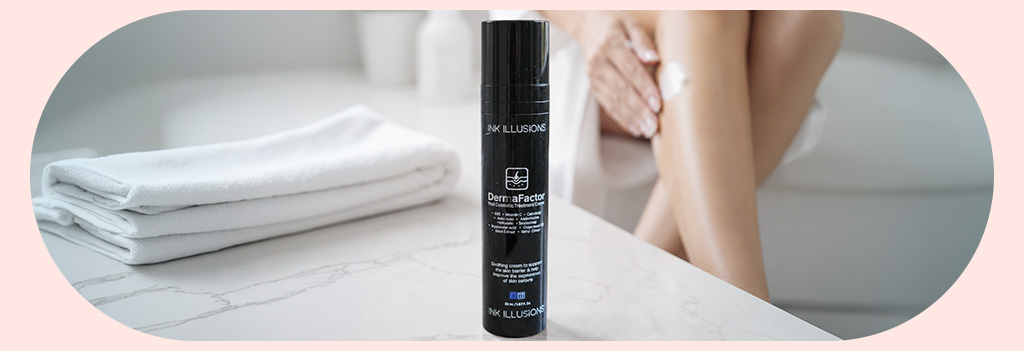
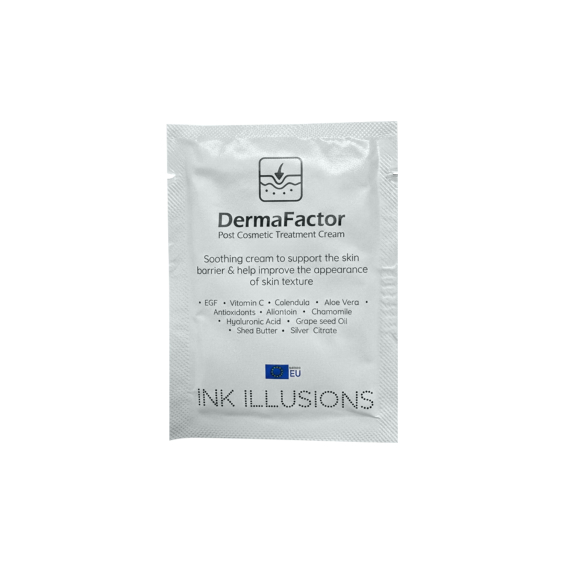
In the first 24 to 48 hours the skin is still vulnerable. DermaFactor is a professional post-treatment cream designed for use after tattooing, MCA inkless tattooing, microneedling and similar treatments. It contains Epidermal Growth Factor, silver and skin-supportive ingredients to help comfort the skin and support the barrier during early recovery.
"I always say the treatment doesn't end when the client leaves the clinic. Aftercare is part of the result. If we are asking the skin to respond well, we need to support it properly afterwards."

Liquid Gold - Skin Prep & Protect is used before and after professional treatments to cleanse, refresh and condition the skin while supporting the skin barrier.
Formulated with panthenol, niacinamide and chamomile, it prepares the skin before treatment and supports comfort afterwards.
"Skin preparation is such an important step. It is not just about wiping the skin. It is about creating the right treatment environment and supporting the skin before and after the procedure."
Why Medical Tattooing Is Such A Strong Opportunity For PMU Artists
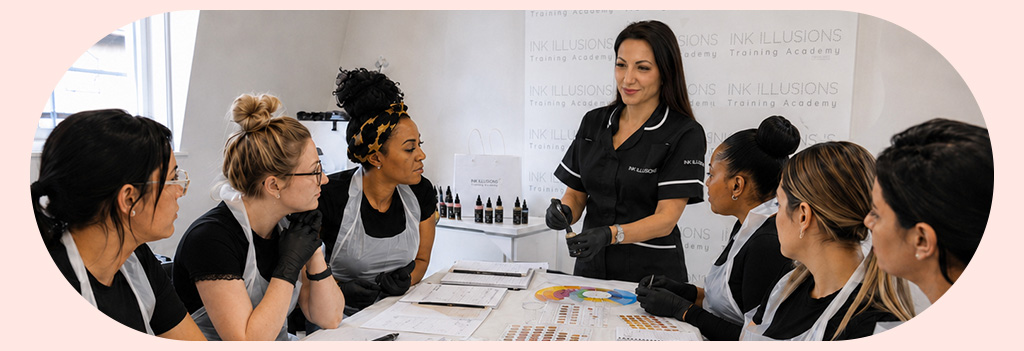
Paramedical tattooing is growing because both artists and clients want something more specialised. Scar camouflage, stretch mark revision and MCA inkless tattooing sit in a far more niche area than brows and lips, but demand is significant and the number of trained artists is still small.
"A lot of artists are looking for what comes next. Brows and lips are very saturated now, but scar and stretch mark work is still highly specialised. There is huge client demand, but not enough trained artists offering it properly."
For artists who want to move into this area safely, education matters as much as product choice. Ink Illusions offers regulated Level 4 and Level 5 paramedical tattooing qualifications for those who meet the required prerequisites, alongside shorter CPD-accredited training in MCA inkless tattooing and scar and stretch mark camouflage.
The Full Scar Camouflage Treatment Pathway

The strongest results usually come from understanding the whole pathway rather than a single step.
| Stage | Product | Purpose |
| Prepare | Liquid Gold | Cleanse, refresh and condition the skin before treatment |
| Improve | INKLESS + MCA inkless tattooing | Support the skin response during needling |
| Camouflage | Heal & Conceal | Custom-blended skin tone pigment where the skin is ready |
| Aftercare | DermaFactor | Support comfort and the skin barrier in the first 24 to 48 hours |
"My aim has always been to raise the standard of scar and stretch mark camouflage. These products were created from real treatment experience, for artists who want to offer better, more considered results to their clients."
For PMU and tattoo artists looking for a meaningful next step, this could be one of the most exciting opportunities in the industry.
Ready To Bring Scar Camouflage Into Your Studio?
Whether you are just starting to explore MCA inkless tattooing or already working with skin tone pigment and looking to refine your results, we have got you. The full Ink Illusions range is available at Killer Beauty, from Liquid Gold and INKLESS through to the complete Heal & Conceal system and DermaFactor aftercare. Take your time, start where you feel confident, and build from there.

Scar Camouflage Tattoo FAQs
Can you tattoo over stretch marks? Yes, once the stretch marks are fully healed and the skin is ready for it. Where the texture is raised, thin or uneven, MCA inkless tattooing is usually the kinder first step, improving the skin before any pigment goes in.
Is scar camouflage tattooing the same as medical tattooing? Scar camouflage sits within medical tattooing, also called paramedical tattooing. It is a lovely area to grow into, and the wider category also includes areola restoration and MCA inkless tattooing.
How is a scar tattoo different from camouflage makeup? Camouflage makeup for scars sits on the surface and needs reapplying every day. A scar camouflage tattoo works within the skin and is designed to last, softening gently over time rather than washing off. For clients who have spent years covering up each morning, that difference means a great deal.
Do tattoos to disguise scars work on every skin tone? They can, but only with a pigment system that lets you apply colour theory properly across every undertone. This is exactly why Heal & Conceal is built as a full system to blend from, rather than a set of ready-made shades.
When is a scar ready for a scar cover up tattoo? Only once it is fully healed and settled. Scar maturity, texture and pigment behaviour all need assessing first, and accredited training will give you the confidence to make that call.